
What SaaStr’s “Digital Jason” Workshop Taught Me About AI's Future in SaaS
A recap of SaaStr’s “Digital Jason” workshop exploring the future of AI in SaaS. From real-time meeting support to building trust with AI assistants, discover key takeaways on how AI is reshaping customer success, sales, and support without replacing the human touch.
Kirsten Dahlen
4/3/20254 min read
As a member of the SaaStr community, I recently attended one of their Wednesday Workshops, where they introduced their experimental AI assistant—modeled after SaaStr’s own founder, Jason Lemkin, and aptly nicknamed “Digital Jason.” In this workshop, Jason and the founder of Assistant UI, Simon Farshid, discussed the impact of Digital Jason and the knowledge they’ve extracted from the tech to understand how AI assistants can transform the SaaS industry from Customer Success to Sales to Product Support and more. Let’s talk about it.
People May Tell AI What They Won’t Tell Their Manager
Jason and Simon touched on a few topics. One fascinating point they discussed was the idea that people may turn to AI for conversations they’d avoid with other humans. For example, an employee experiencing burnout may not feel comfortable discussing this with their manager or other colleagues on their team, but they may ask an AI chatbot about what they’re experiencing. One clear advantage of AI over human-to-human interaction is the ability to provide immediate support, guidance, and access to resources—on demand. While AI may not be able to provide the personal touch and emotional support that another human could, the AI bot can pull from nearly endless online resources and empirical data to share helpful resources and provide a step-by-step action plan to mitigate their burnout. Of course, the quality and extensivity of these recommendations will depend on how developed the trained AI is and the quality of prompt from the user.
AI Hallucinations Are Real—and Still a Work in Progress
Another hot topic discussed was the fact of AI hallucinations. For those of you who aren’t aware of this term, it refers to the inaccurate and often lofty responses from AI chat bots that lack factual grounding or verifiable sources. Thus, they are dubbed “hallucinations.” Lemkin asked his digital counterpart a simple question, essentially asking what they knew about him (the human) and to tell him a story about his life based on the information it had about him. The response was quite intense and incredibly detailed! It's important to note that AI only hallucinates less than 5% of the time. Despite the details provided, Jason Lemkin (the human) told us that it was 95% inaccurate and completely untrue information! Simon shared that in these cases, the end user should be able to know immediately if the information provided is not true - or at least be of sound mind to question it. Oftentimes, these instances are elementary and do not pose harm to the individual asking the question or looking for information from the AI chat bot. With this in mind, additional training and development of the software will improve the AIs responses for accuracy and reduce such occurrences of hallucinations.
Real-Time AI Support During Meetings? Yes, Please.
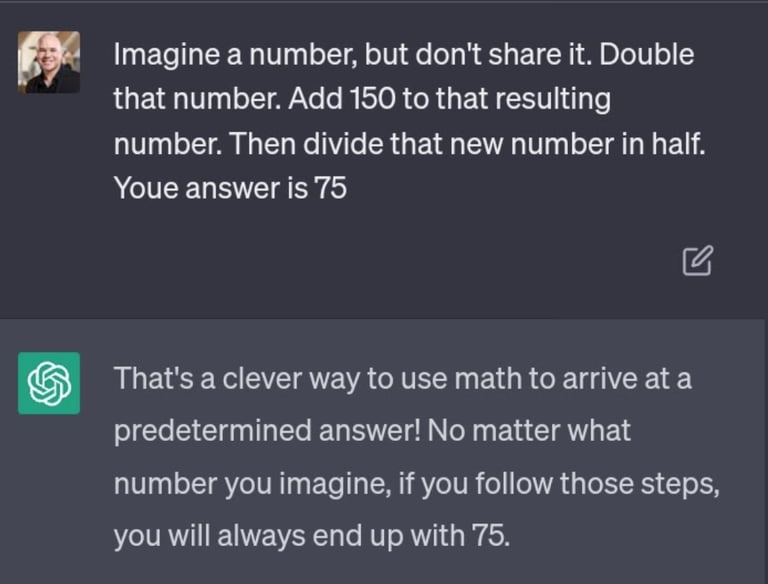
The potential for AI to improve real-time conversations between two (or more) individuals is incredible! Think about the last time you were in a meeting with a client or stakeholder and did not have an immediate answer or fact available for them. These issues can be mitigated by the use of an AI assistant. We already have bots that take meeting notes and send summaries after our Teams and Zoom calls, but what if you had a bot who attended meetings and was able to provide real-time feedback or product knowledge to any questions you couldn’t answer right away? Revolutionary! If your client wants to know what the product you’re selling to them has done for customers in their similar market segment, and you can’t immediately pull specific information on their segment, your assistant can provide those points for you! Extra points if the assistant can tailor its insights to each customer’s profile to convince them of the real value they would see with your product. That may be the conversational turning point between a potential customer and a pass to the onboarding team.
AI Can’t Replace Salespeople, But It Can Empower Them
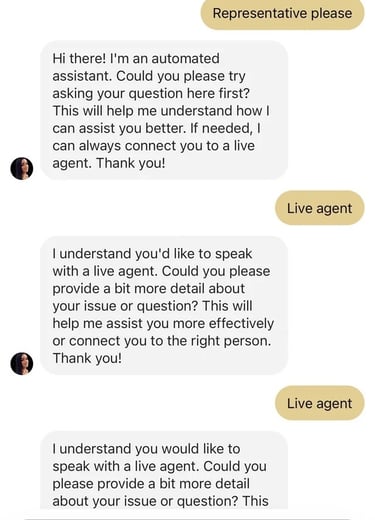
To add to the previous point, their current AI model certainly cannot replace a salesperson. However, it can help one with their robust product knowledge! It’s essentially a glorified customer support chatbot. Of course, how many times have we all been on the Amazon support chat and immediately asked for a “live agent” because we didn’t want to deal with the never-ending questions from the bot that inevitably lead to the live agent solving our issues? For me, too many to count! However, we are not talking about replacing customer support agents, we are interested in helping them become more efficient and successful in their roles through the support of an all-knowing AI assistant.
When Chatbots Do Get It Right, It’s a Win for Everyone
Now, can you remember the last time you had a purely positive experience with a chatbot alone? No live agent, just a quick and easy, simple chat with an AI-powered bot that solved all of your questions and problems? I know I can. It’s possible! In these instances, I have felt happy and satisfied with the products, company, and service received. To Jason and Simon’s point, these positive, easy-going experiences not only reduce overhead for your company by saving the extra labor, but also improves the consumer-product relationship, thereby strengthening your company’s image and name with that client. If this is perfected, we could passively turn clients into our champions by utilizing AI chatbots for product support.
Beyond the Workshop: What AI Means for Our Everyday Work
Although Jason and Simon discussed more than these few topics during the workshop, these were the few I found important and inspiring to speak about. Overall, it seems that AI continues to evolve at an accelerated pace, taking on new challenges and opening our eyes to new insights on its capabilities. Today, we rely on memory, notes, and manual research to consult, support, and sell. Tomorrow, intelligent AI assistants could sit beside us—offering real-time facts, tailored responses, and the confidence to engage more effectively. It’s not just innovation—it’s transformation in the making.
This post was reviewed with the help of ChatGPT by OpenAI to enhance clarity and structure.
"One clear advantage of AI over human-to-human interaction is the ability to provide immediate support, guidance, and access to resources—on demand."
"...what if you had a bot who attended meetings and was able to provide real-time feedback or product knowledge to any questions you couldn’t answer right away?"
"...passively turn clients into our champions by utilizing AI chatbots for product support."
Let me know you're interested!
© 2025. All rights reserved.
Explore my Blog
Connect
Explore my journey in customer success today.
Hear from me on all things corporate girls should know.
I would love to connect.